02-056-3333




A newborn’s vision is mostly blurry, but the visual system develops over time and is fully formed in the teen years. Learn how to protect your child’s vision with regular eye screenings as they grow.
Recommended Schedule for Child Vision Screenings
A vision screening is a more efficient eye exam. A child is “screened” for eye problems and referred to an ophthalmologist for a comprehensive exam if needed. Your child’s vision can be screened by a:
- pediatrician
- family physician
- ophthalmologist
- or other properly trained health care provider
Screenings are also offered at schools, community health centers or community events. We recommend the following schedule:
Newborn
An doctor or other trained health professional should examine a newborn’s eyes to check for basic indicators of eye health. It may include testing for:
a “red reflex” (like seeing red eyes in a flash photograph). If the bright light shone in each eye does not return a red reflex, more testing may be needed.
blink and pupil response
An ophthalmologist should do a comprehensive exam if the baby is:
born prematurely
has signs of eye disease
or a family history of childhood eye disease
6 to 12 months
A second screening should be done during the child’s first year of life. This screening is usually done at a well-child exam between 6 and 12 months. Your child’s pediatrician or other health care professional should:
do the tests mentioned above
visually inspect the eyes
check for healthy eye alignment and movement
12 to 36 months
Between 12 and 36 months, a child is checked for healthy eye development. There may be a "photoscreening" test. A special camera takes pictures of your child’s eyes. These pictures help find problems that can lead to amblyopia (lazy eye). If they see a problem, your child may be referred to an ophthalmologist.
3 to 5 years
Between 3 and 5 years, a child’s vision and eye alignment should be checked. This may be done by a pediatrician, family doctor, ophthalmologist, optometrist or an orthoptist.
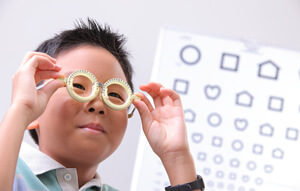
Visual acuity (sharpness of vision, like 20/20 for example) should be tested as soon as the child is old enough to read an eye chart. Many children are somewhat farsighted (hyperopic), but can also see clearly even at distance. Most children will not require glasses or other vision correction. If the child struggles with the eye chart, photoscreening may be used to test vision.
An ophthalmologist should see your child if the screening shows signs of:
misaligned eyes (strabismus)
"lazy eye” (amblyopia)
refractive errors (myopia, hyperopia, astigmatism)
or another focusing problem
Begin treatment for these problems as soon as possible—getting early treatment for your child is the best thing you can do to protect their vision.
5 years and older
At 5, children should be screened for visual acuity and alignment. Nearsightedness (myopia) is the most common problem in this age group. It is corrected with eyeglasses. An ophthalmologist should examine a child with misaligned eyes or signs of other eye problems.
Information from American Academy of Ophthalmology